The Market – Our Trade Model & Transparency
At Agramaark, we believe in building a transparent, inclusive, and efficient agri-trade ecosystem—right from the village to the end market. Our trade model is designed to create value at the grassroots while ensuring quality, traceability, and reliability for buyers.
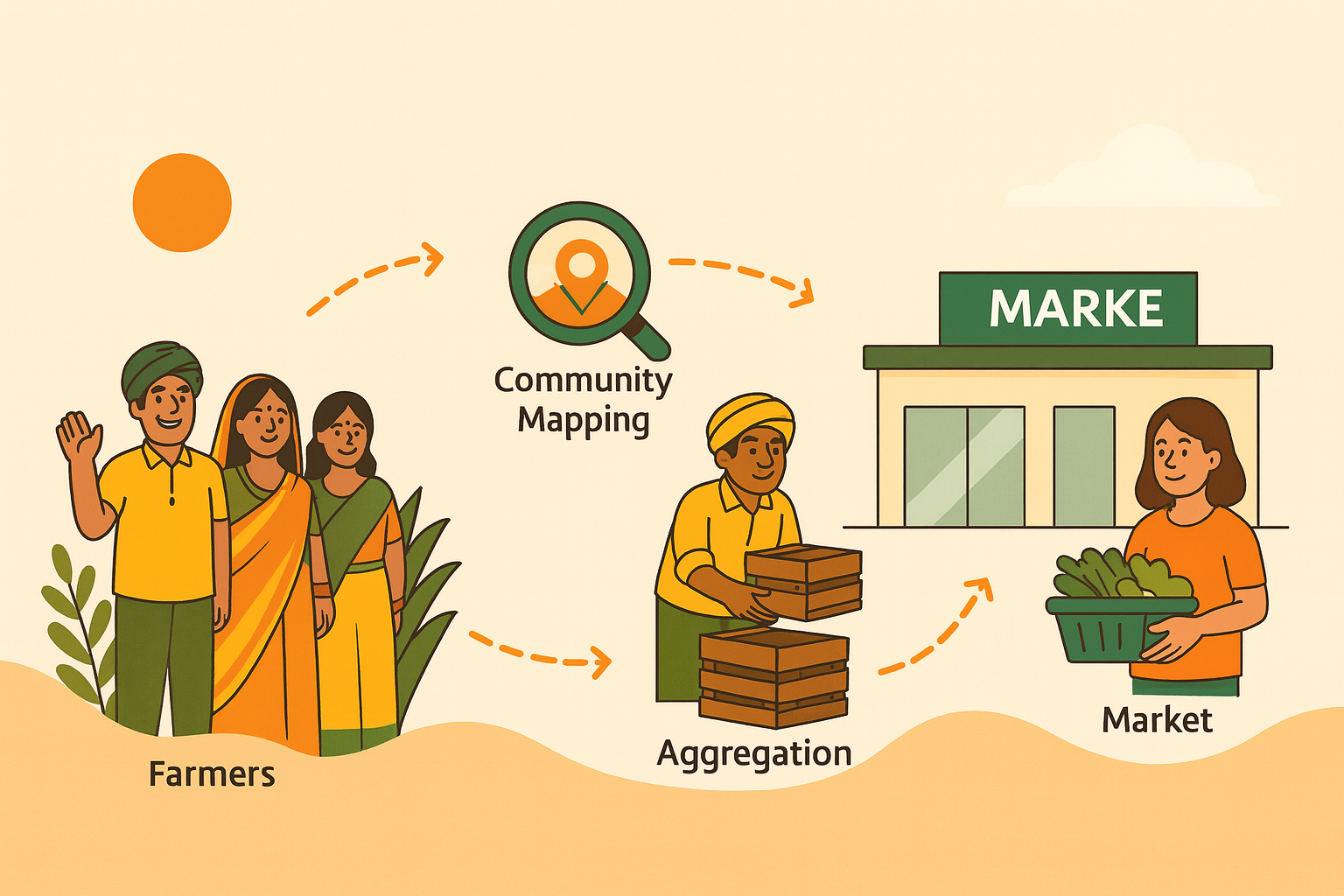
Our Trade Model: From Village to Value Chain

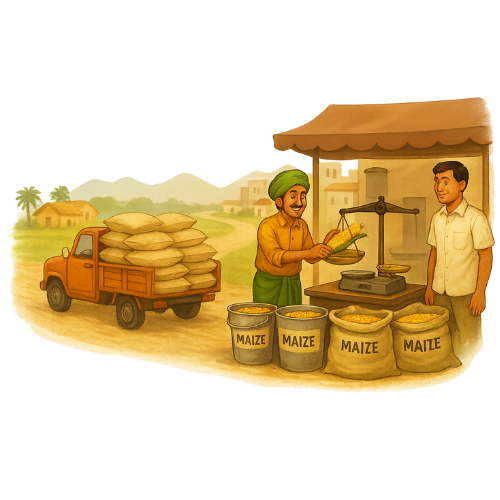
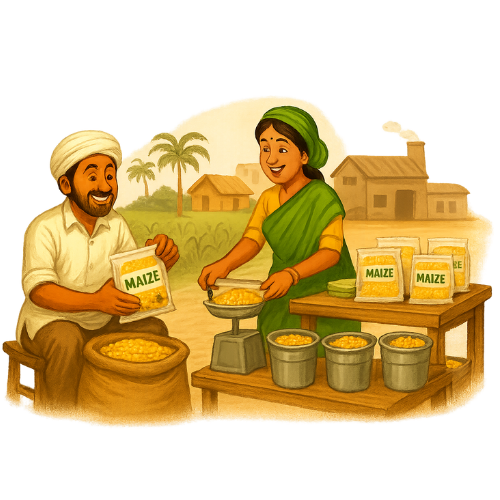
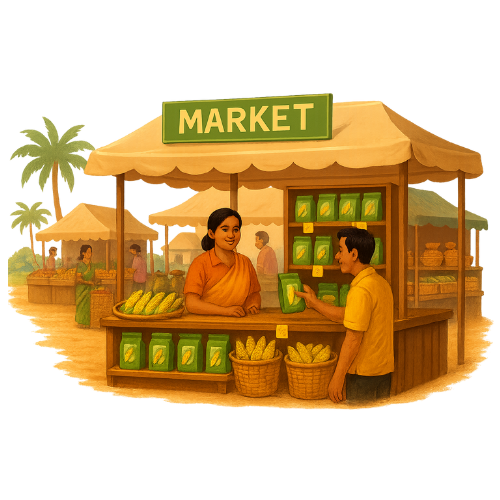
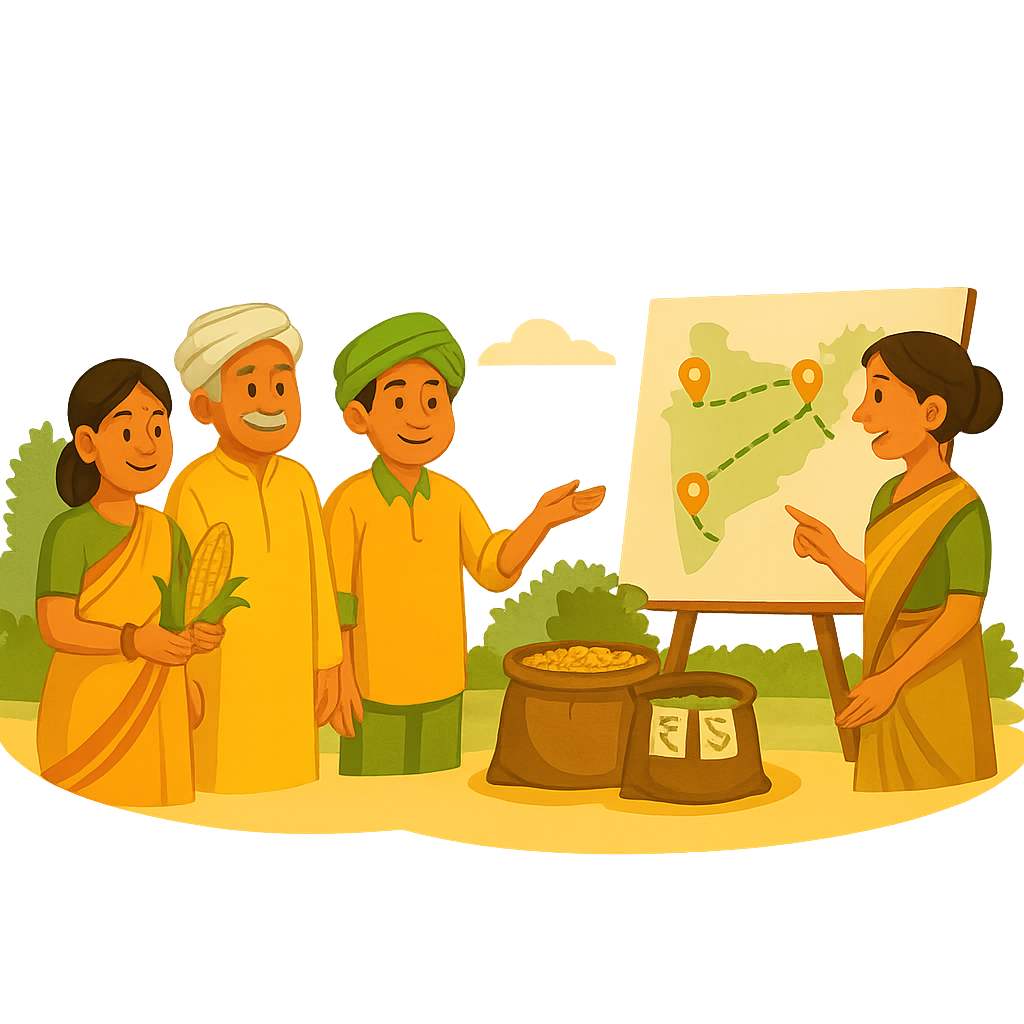
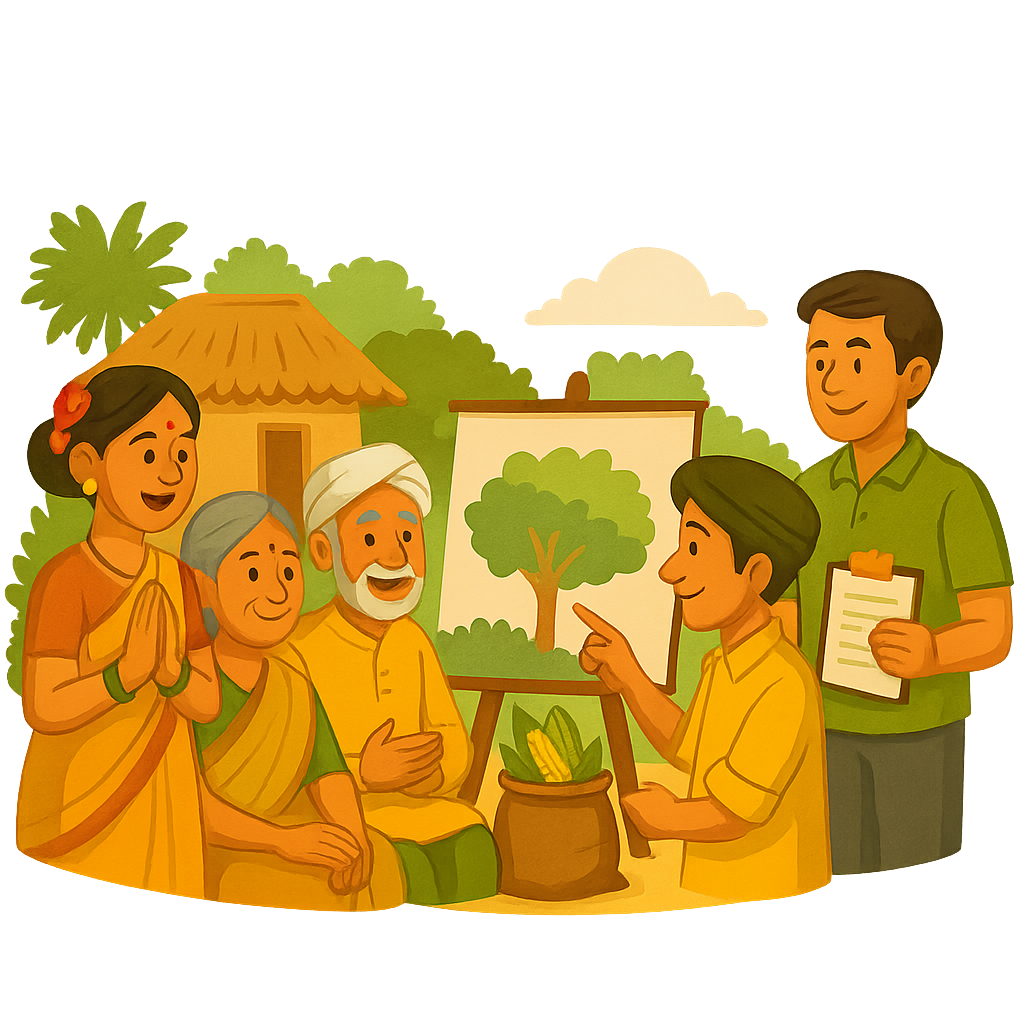
Community-Centric Value Chain Mapping
Why: To build interventions that are rooted in local needs and realities.
- How Agramaark works :
- Conduct crop-wise value chain mapping across key districts with initial focus on Odisha and Jharkhand, progressing into UP, Bihar in the next 3 years.
- Identify grassroots actors including SHGs, FPOs, informal aggregators, and mandis.
- Leverage partnerships with Krishi Vigyan Kendras (KVKs), local NGOs, and government bodies DoA, ORMAS, Mission Shakti, ST Department, Jeevika Mission, MMMM etc for real-time, decentralized insights.
Trusted Onboarding of Rural Producers
Why: To create an empowered and loyal producer base.
- How Agramaark works::
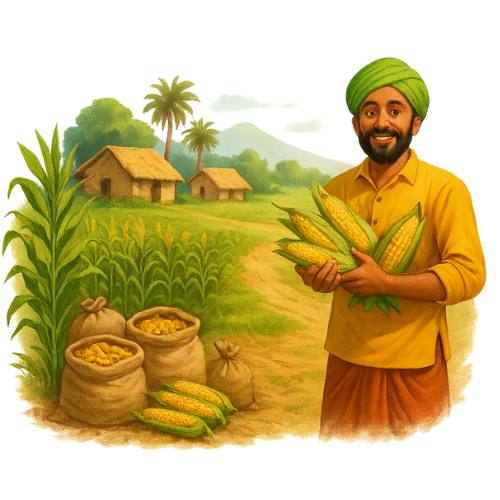
- Run onboarding pilots in focused districts using local leaders, traders and SHG/FPO networks.
- Build trust through consistent field presence, transparent communication, and value demonstration (immediate buy back for crops).
- Offer immediate incentives—fair pricing, faster payments, and access to inputs—to establish early success and confidence.
Micro-Level Aggregation & Quality Management
Why: To build rural-level efficiency and quality control closer to the source.
- How Agramaark works::
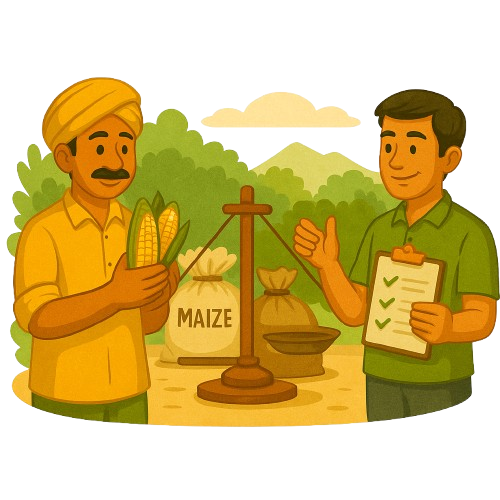
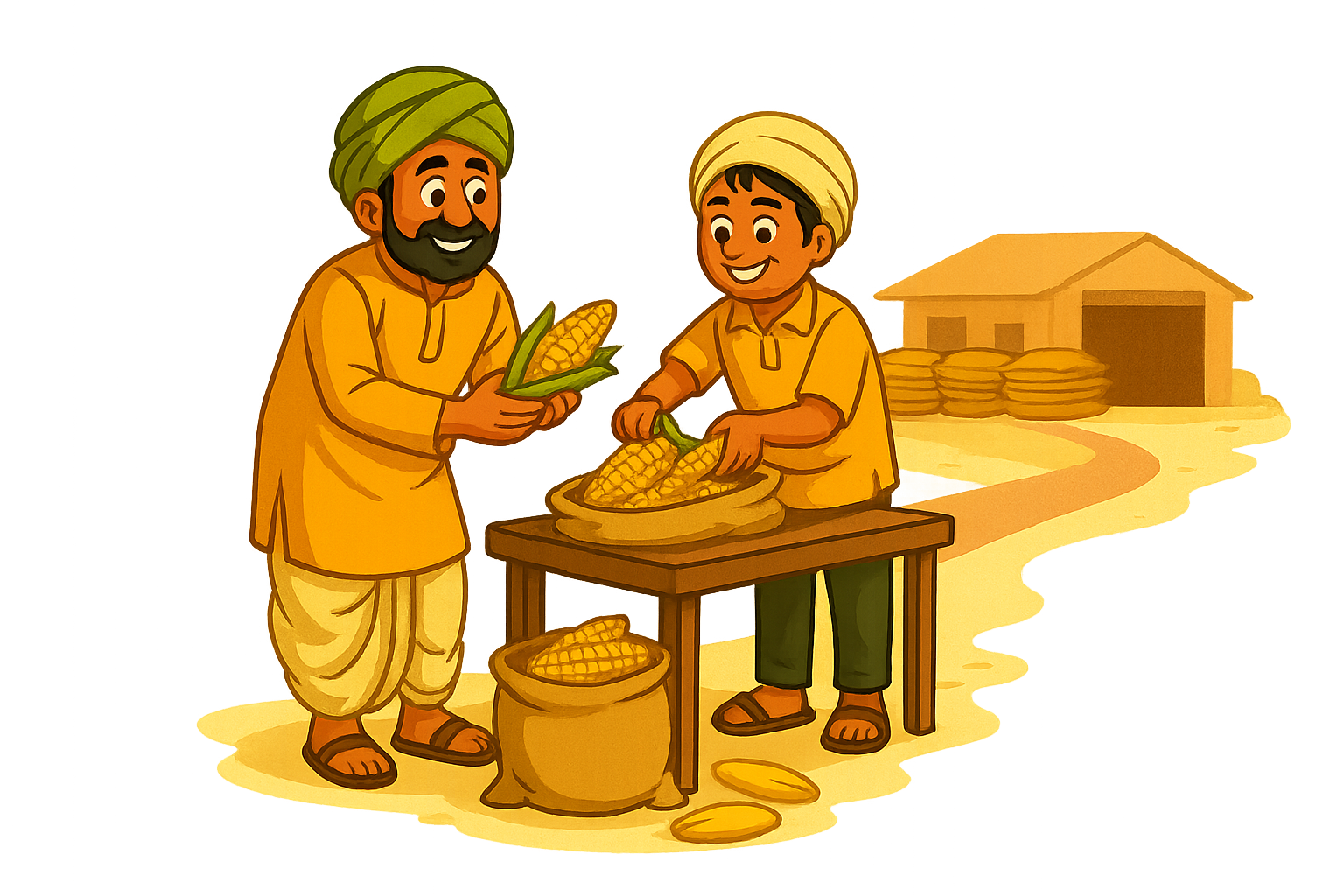
- Establish micro-collection hubs managed by local youth, SHGs, or FPOs for basic grading, weighing, and sorting.
- Train grassroots actors in quality standards, aggregation norms, and digital record-keeping.
- Implement tech-based tools to digitize procurement and ensure price transparency and traceability.
Rural Infrastructure, Input Access & Logistics
Why: To improve produce handling and reduce cost leakages across the chain.
- How Agramaark works::
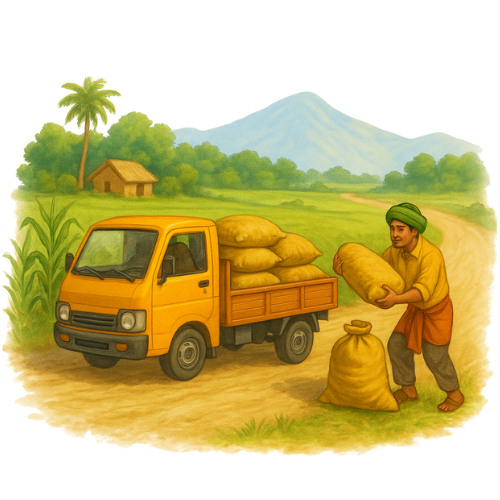
- Invest in low-cost storage (solar dryers, community sheds) and last-mile transport (shared tractors, local vans).
- Facilitate timely and bulk procurement of quality inputs (seeds, bio-fertilizers, etc.) through SHGs and FPOs.
- Tap into schemes like PMFBE, Agri Infra Fund, and convergence with CSR/govt programs for co-financing.
Inclusive Market Linkages & Impact Branding
Why: To connect rural producers to high-value, ethical markets.
- How Agramaark works::
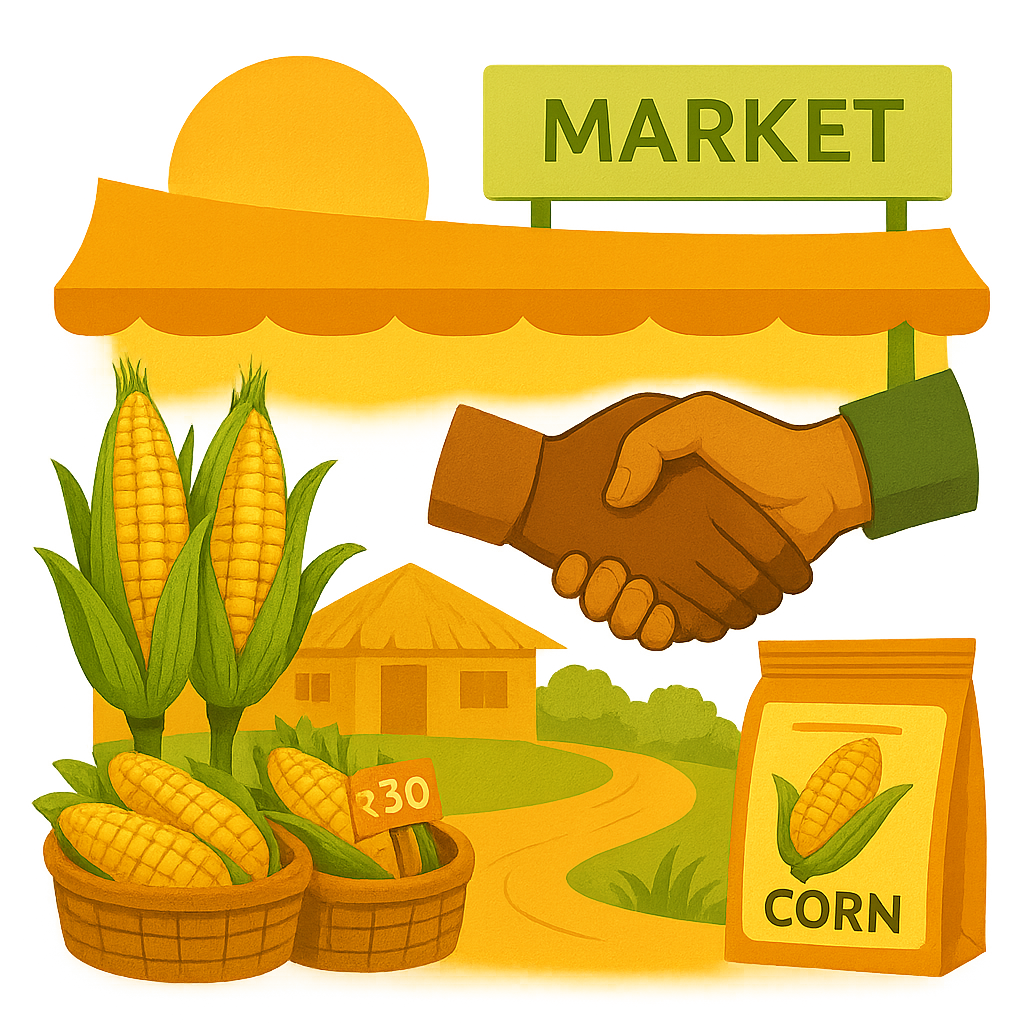
- Start with local institutional buyers (feed plants, processors, canteens) and expand to urban, e-commerce, and export markets.
- Build a value-based brand focused on traceability, sustainability, and fair trade.
- Track and share measurable impact: farmer income increases, women/youth employment, and post-harvest loss reduction—building brand credibility and buyer confidence.
Tech-Driven Fair Pricing & Information Access (next 5 year plan)
Why: To reduce exploitation and empower producers with data.
- How Agramaark works::
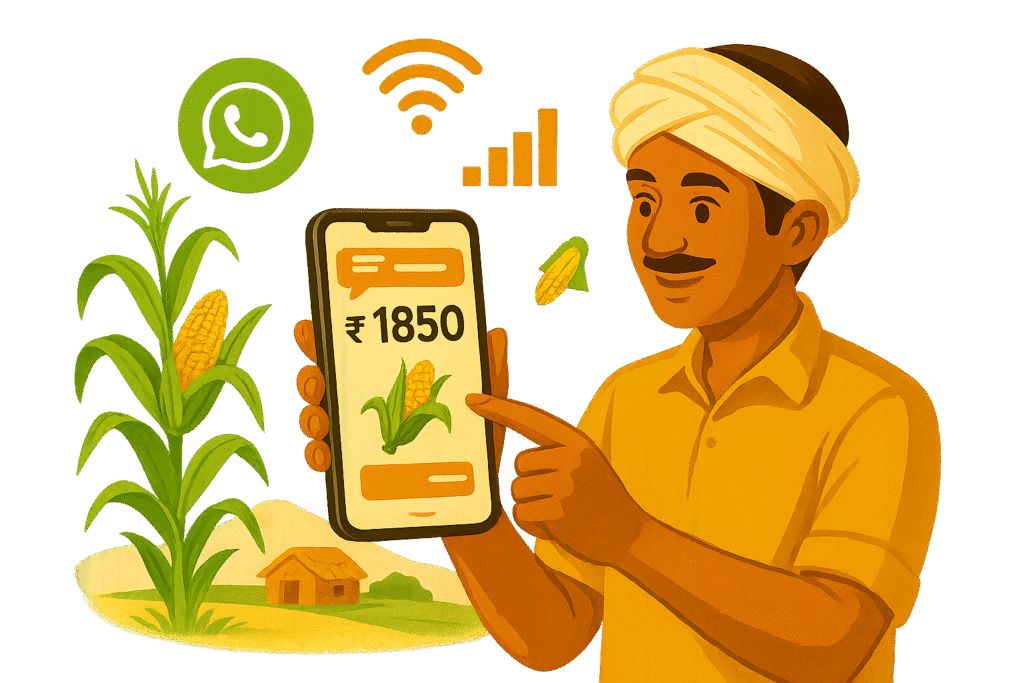
- Use WhatsApp bots or mobile apps to share daily market prices, collect harvest data, and facilitate digital payments.
- Integrate predictive analytics for price forecasting to help producers make informed selling decisions.
- Offer a seamless, low-tech interface that is accessible even in low-connectivity rural areas.